


How Creators Automate Their Email Marketing and Grow on Autopilot with Kit

Creators don’t usually fail because they don’t have ideas. They fail because they don’t have leverage.
At first, email marketing feels manageable: send a newsletter when you have something to say, promote a new post, and maybe pitch a product once in a while. But as your audience grows, email becomes another full-time job—writing, segmenting, scheduling, following up, and trying not to annoy people.
The irony is that email is supposed to make your business more stable. Instead, many creators end up burned out because they’re running email manually like a never-ending to-do list.
The fix isn’t “send less.” The fix is building an automation system that works 24/7—so new subscribers get nurtured, interested readers get guided toward offers, and your list grows into a revenue engine on autopilot. That’s exactly what Kit is designed for: creator-friendly email automation that turns your audience into an owned business asset.

Why Creators Burn Out Managing Email Manually
Manual email marketing is fine when your list is small. It becomes exhausting when you’re trying to scale a creator business—because email touches everything: content, launches, revenue, and relationships.
Here are the most common causes of creator email burnout:
Writing newsletters feels endless
Newsletters are great for building connection, but writing them every week (or multiple times per week) can feel like a constant pressure. Many creators become trapped in a cycle where the newsletter must be written before anything else can happen.
Segmenting subscribers becomes complicated
Once your list grows, not everyone should receive the same emails. New subscribers need onboarding. Buyers need different messaging. People interested in one topic shouldn’t be spammed with another. Without a system, segmentation becomes manual chaos.
Sending campaigns becomes a weekly “push” effort
Broadcast emails are one-time sends. They require you to remember what to send, when to send, and who to send to. If you don’t send, revenue slows. If you do send too often, engagement drops. It becomes emotionally draining.
Following up manually doesn’t scale
The biggest missed opportunity is follow-up. Many creators collect emails through freebies but never build a nurture sequence that turns new subscribers into paying customers. That means the list grows—but revenue doesn’t grow with it.
All of this leads to a common creator trap: you’re building an audience, but you’re not building a system.
The Difference Between Broadcasting and Automation
To grow sustainably, you need to understand one key distinction: broadcasts are events; automation is infrastructure.
Broadcast = one-time send
A broadcast is a newsletter, announcement, or launch email you send once. It’s tied to a moment: a new video, a product drop, a weekly update, a limited promotion.
Broadcasts are useful for:
- weekly newsletters and creator updates
- launch announcements
- time-sensitive promotions
- community engagement
Automation = a system that works 24/7
Automation runs in the background. It sends the right emails based on triggers and behavior, without you needing to remember. This is what creates leverage: a new subscriber today can be nurtured into a customer next week—even if you’re not actively “campaigning.”
Automation is ideal for:
- welcome sequences
- sales funnels
- evergreen webinars
- product education sequences
- re-engagement flows
Three automations every creator should have
1) Welcome sequence
This is the onboarding journey that introduces your story, your best content, and your positioning. It builds trust fast and reduces the “cold subscriber” problem.
2) Sales funnel
A sales funnel sequence educates subscribers around a problem and then presents an offer as the natural next step. The key is relevance: your emails should teach, not spam.
3) Evergreen webinar (or evergreen workshop)
This is one of the strongest creator funnels because it delivers value before the offer. The webinar can run continuously, and your automation can invite subscribers at the right time.
In short: broadcasts help you show up. Automation helps you scale.
How Kit Automates Growth
Kit is built for creators who want a simple, creator-first approach to email automation. Instead of making email feel like corporate marketing software, Kit focuses on workflows that match how creators actually grow: audience → trust → offer.
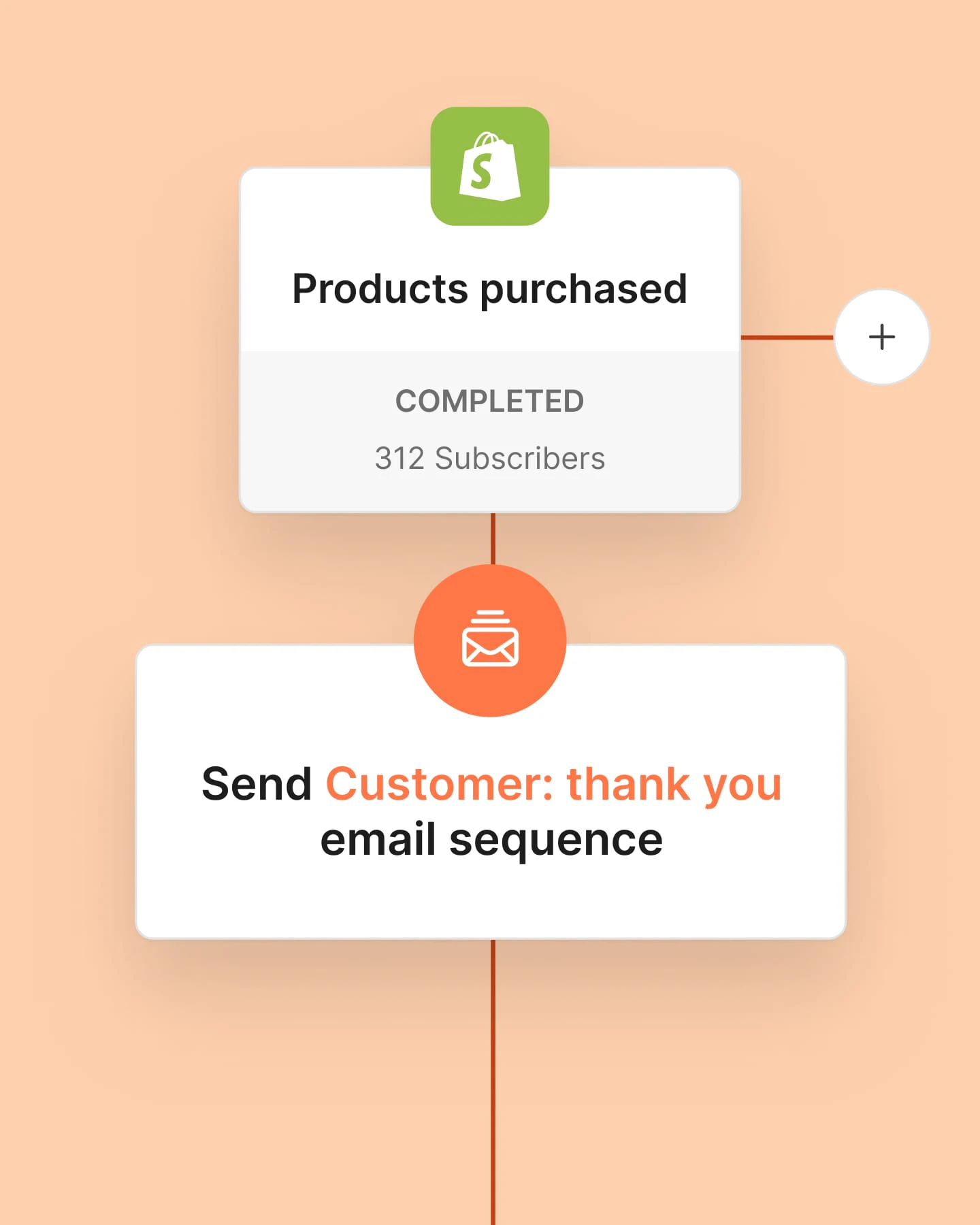
Visual automation builder
Automation becomes easier when you can see the flow. A visual builder helps you design sequences like:
- subscriber joins → welcome emails → segmentation → offer
- freebie download → educational sequence → product pitch
- webinar signup → reminders → replay → sales follow-up
Instead of managing everything manually, you build the logic once and let the system run.
Tag-based subscriber system
Creators often have multiple interests and products. Tags help you keep your list organized without creating endless separate lists.
Examples of useful tags:
- downloaded-freebie
- interested-in-topic-A
- attended-webinar
- bought-product-1
- VIP-subscriber
With tags, subscribers receive emails that match their interests and stage—without you needing to manually segment every campaign.
Forms and landing pages for easy list growth
Most creators grow through lead magnets: a checklist, template, guide, or mini-course. To capture emails, you need clean opt-in forms and landing pages that convert.
When your form and automation are connected, the experience becomes seamless: a subscriber opts in, receives the freebie, and immediately enters your welcome/nurture sequence.
Creator-friendly UX
What creators need is speed and clarity. The more complicated the tool, the less likely you’ll actually build automations. Kit is designed to make automation approachable—so you can spend more time creating and less time managing marketing logistics.
From Subscriber to Paying Customer (Simple Funnel Example)
You don’t need a complicated funnel to monetize. You need a clear path that turns attention into trust, then trust into a purchase.
Here’s a simple creator funnel that works across niches:
Instagram → Landing page → Freebie → Email sequence → Offer
Step 1: Instagram (or any traffic source)
Your content attracts people with a specific interest. The key is not to send them to a homepage or a “link tree” with 10 options. Send them to one landing page with one promise.
Step 2: Landing page
The landing page should answer:
- What is this freebie?
- Who is it for?
- What outcome will it help me get?
Step 3: Freebie delivery
The freebie should create a quick win. Quick wins build trust. Trust reduces resistance when you present an offer later.
Step 4: Email sequence (automation)
A simple 5-email nurture sequence could look like this:
- Email 1: deliver the freebie + set expectations
- Email 2: a quick implementation tip
- Email 3: a story or case study (proof)
- Email 4: common mistakes and how to avoid them
- Email 5: invite to the offer
Step 5: Offer
The offer should feel like the next step, not a random pitch. The goal is not to sell to everyone. The goal is to sell to the right people, consistently.
This funnel works because it turns “cold traffic” into “warm subscribers” before selling. Automation makes it run even when you’re offline.
Monetizing Your Email List Without Ads
Creators often assume they need ads to monetize. In reality, ads amplify systems that already work. If you build an email system that converts, you can monetize without spending on traffic.
Here are four creator monetization paths that pair naturally with email automation:
Digital products
Templates, playbooks, mini-courses, and toolkits sell well when the email sequence educates the problem and positions the product as the solution.
Membership
Memberships work when you sell ongoing transformation: community, accountability, and continuous education. Automation helps by onboarding members and nurturing subscribers toward joining.
Paid newsletter
If your content has strong unique insights and a clear niche, a paid newsletter can be a stable revenue stream. Email automation helps segment engaged readers and invite them into paid access at the right moment.
Creator recommendations
Many creators monetize through recommending tools and products they trust. Automation can deliver relevant recommendations based on subscriber interests, instead of blasting every reader with the same pitch.
The key idea: you don’t need ads to monetize. You need a system that compounds. Email is that system—because it’s owned, direct, and repeatable.
Final Thoughts
Automation is leverage. It turns email marketing from “something you do” into “something that works for you.” Instead of manually sending and following up, your system nurtures new subscribers, delivers value, and presents offers consistently—even when you’re not actively pushing.
Email is an owned audience. Social traffic is rented attention. Landing pages and automations are the bridge that converts attention into revenue.
Building creator growth on autopilot with Kit becomes much easier when your welcome sequence, tagging system, and automation funnels are set up to convert subscribers into customers—so every new follower has a clear path to become part of a sustainable creator business.


