


Shiprocket Guide For Indian Ecommerce Shipping

Shipping is where many Indian ecommerce stores lose control. A product may sell well, but late delivery, failed COD orders, unclear tracking, courier mismatch, and return-to-origin problems can quietly reduce profit.
That is why choosing a shipping platform is not only about freight rates. The better question is whether the platform helps you manage orders, courier selection, tracking, COD, returns, and customer communication from one place.
For Indian sellers who want to sign up for Shiprocket, the main value is simplifying ecommerce logistics without building a courier network manually.
This guide explains what Shiprocket does, who it is best for, what to check before using it, and how to avoid common shipping mistakes that hurt customer experience and margins.

Shiprocket at a Glance
Shiprocket is an ecommerce shipping and logistics platform for Indian sellers. Shiprocket Support describes it as a platform that helps businesses streamline order fulfillment by integrating online stores, generating shipping labels, choosing courier partners, tracking shipments, and managing returns (Source: Shiprocket Support).
| Seller question | How Shiprocket helps | Why it matters |
|---|---|---|
| Can I connect my store? | Shiprocket Support says businesses can integrate online stores such as Shopify, WooCommerce, Amazon, and others with the platform (Source: Shiprocket Support). | Store orders can move into one shipping workflow. |
| Can I compare couriers? | The Shopify App Store listing says Shiprocket brings together 25+ courier partners in one unified interface (Source: Shopify App Store). | Sellers do not need to depend on only one courier partner. |
| Can I ship across India? | Shiprocket says its domestic shipping services serve 19,000+ unique pin codes nationwide (Source: Shiprocket). | Broader delivery coverage helps sellers reach more buyers. |
| Can I handle prepaid and COD? | Shiprocket FAQ says sellers can choose courier partners, ship prepaid or COD orders, schedule pickups, and track deliveries from a single dashboard (Source: Shiprocket). | COD remains important for many Indian ecommerce categories. |
| Can I manage returns and RTO? | Shiprocket highlights smart NDR redressal, returns management, branded tracking, and dashboard analytics for forward and return orders (Source: Shiprocket). | RTO and failed delivery need active control, not manual guessing. |
It centralizes shipping work
Without a platform, sellers may need to move between courier websites, spreadsheets, order exports, WhatsApp messages, and manual tracking links.
Shiprocket helps bring order syncing, shipment creation, courier selection, labels, tracking, returns, and COD workflows into a more centralized process.
It is built for Indian ecommerce sellers
Indian ecommerce has specific challenges: COD orders, pin-code coverage, failed delivery attempts, NDR follow-up, prepaid conversion, RTO risk, courier performance differences, and regional delivery expectations.
Shiprocket is useful because it is designed around those practical ecommerce logistics problems instead of only offering a simple parcel booking tool.
It can fit small and growing stores
The App Store listing says Shiprocket is trusted by 2,70,000+ businesses across India, including small enterprises, D2C brands, ecommerce giants, and multinational companies (Source: Apple App Store).
That does not mean every seller needs every feature on day one. But it shows the platform is positioned for sellers at different stages of growth.
Why Ecommerce Shipping Needs a System
Shipping problems often look small at first. One delayed order, one failed COD delivery, one wrong courier, one return. But when order volume grows, these issues become profit leaks.
Manual shipping does not scale well
Manual shipping may work when you have five orders a week. It becomes harder when you have daily orders from Shopify, marketplaces, WhatsApp, Instagram, or other sales channels.
A shipping system helps sellers avoid repeated manual entry, scattered tracking, and unclear order status. It also gives the team one place to monitor what is happening.
Courier choice affects delivery success
Not every courier performs equally well in every city, pin code, product category, or payment mode. A courier that works well in one region may not be the best option elsewhere.
Shiprocket says its platform includes a courier recommendation engine and AI-based courier recommendations for better delivery performance (Source: Shiprocket).
Tracking affects customer trust
Customers do not only care that the order is shipped. They want to know where it is, when it will arrive, and what to do if delivery fails.
The Shopify App Store listing says Shiprocket includes a branded tracking page and instant order updates to buyers through email, WhatsApp, and SMS (Source: Shopify App Store).
How Shiprocket Helps with Daily Shipping
The main benefit of Shiprocket is not one single feature. It is the way several shipping tasks connect inside one workflow.
Sync orders from your store
Shiprocket Support says businesses can integrate stores such as Shopify, WooCommerce, Amazon, and other platforms with Shiprocket (Source: Shiprocket Support).
This matters because order syncing saves time. Instead of copying order details manually, sellers can move orders into a shipping workflow more easily.
Create shipments and labels
Shiprocket Support explains that sellers can generate shipping labels and access courier partners through the platform (Source: Shiprocket Support).
This is useful for teams that need a repeatable process. A clean shipping label, pickup scheduling, and order status make daily operations easier to manage.
Track forward and return orders
Shiprocket’s features page says sellers can view analytics for forward and return orders, shipments, NDR, RTO, and more from a single-view dashboard (Source: Shiprocket).
That visibility helps store owners understand whether delivery problems are occasional or part of a pattern.
Partnered with Shiprocket: This guide includes Shiprocket links for Indian ecommerce sellers who want to compare shipping workflows, courier options, tracking, COD handling, and delivery performance tools.
COD and RTO Are the Real Profit Test
For many Indian ecommerce sellers, COD is both useful and risky. It can increase buyer trust, but it can also create higher failed-delivery and return-to-origin pressure.
COD can help conversion but increase risk
Some customers prefer COD because they do not want to pay before delivery. That can help sales in certain categories and regions.
But COD orders can also fail when customers change their mind, refuse delivery, enter weak addresses, or are not reachable. That means sellers should not measure COD only by orders placed. They should measure delivered orders and net profit.
NDR needs quick action
NDR means non-delivery report. When delivery fails, the seller often needs to act quickly before the shipment turns into RTO.
Shiprocket says it offers smart NDR redressal and support resources describe tools for reducing return-to-origin shipments, including COD management and actions around risky COD orders (Source: Shiprocket Support).
RTO should be tracked by product and channel
RTO is not only a courier issue. It can also come from weak product pages, misleading ads, poor address quality, bad buyer intent, slow delivery, or COD abuse.
Use Shiprocket data to compare RTO by product, region, campaign, sales channel, and payment method. This helps you fix the cause instead of blaming every failed delivery on the courier.
Where Shiprocket Checkout Fits
Shipping starts before the parcel is packed. Checkout quality, cart design, payment behavior, and COD risk all affect what happens after an order is placed.
Checkout speed affects order completion
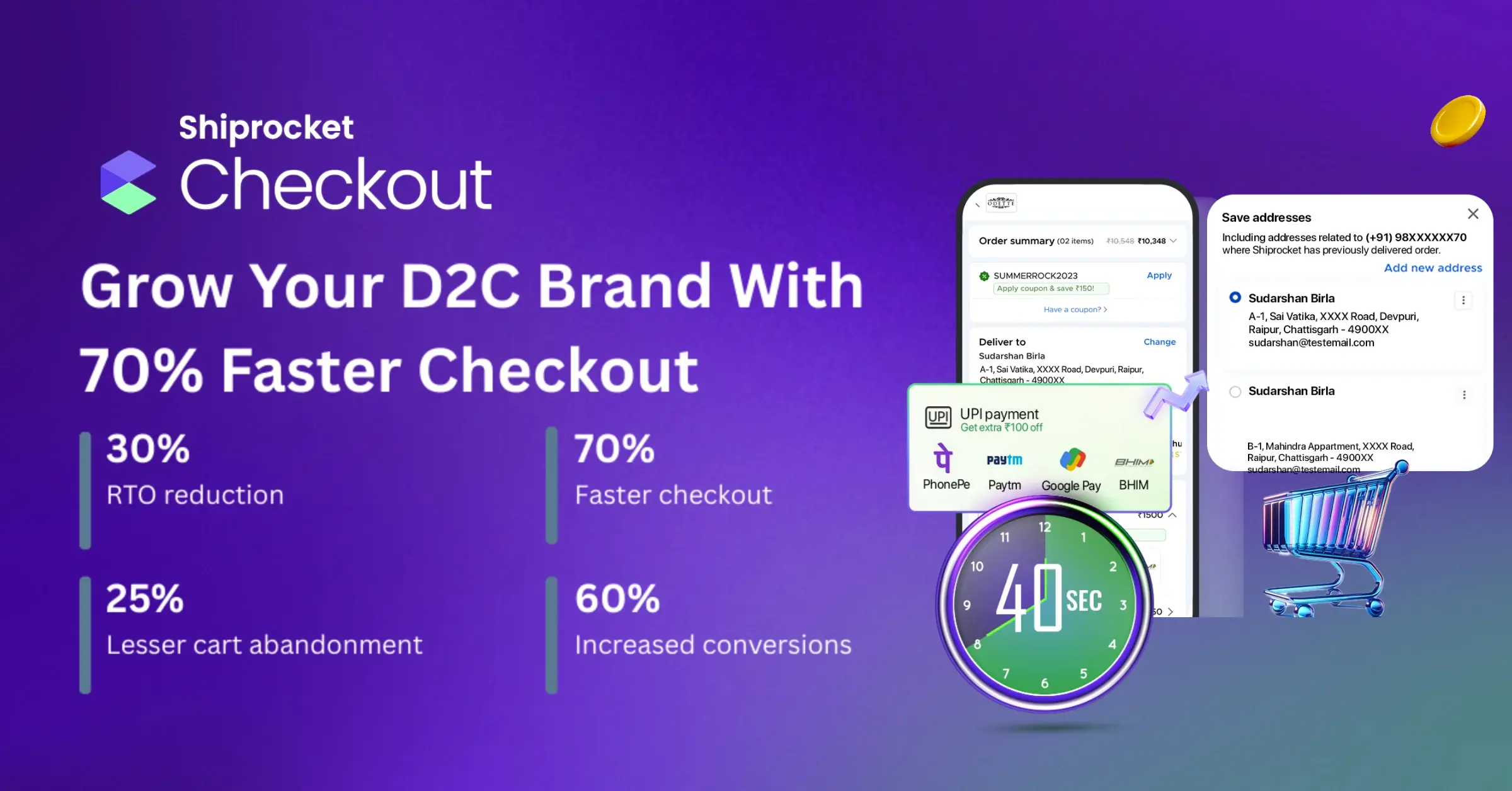
Shiprocket Checkout, now shown as fastrr Checkout, describes itself as a checkout solution that speeds up transactions by up to 70%, helps brands convert COD orders to prepaid, boosts conversions, and reduces cart abandonment and RTOs (Source: Shiprocket Checkout).
This matters because abandoned checkouts and weak payment experiences can limit growth before shipping even begins.
Smart cart can support better buying decisions
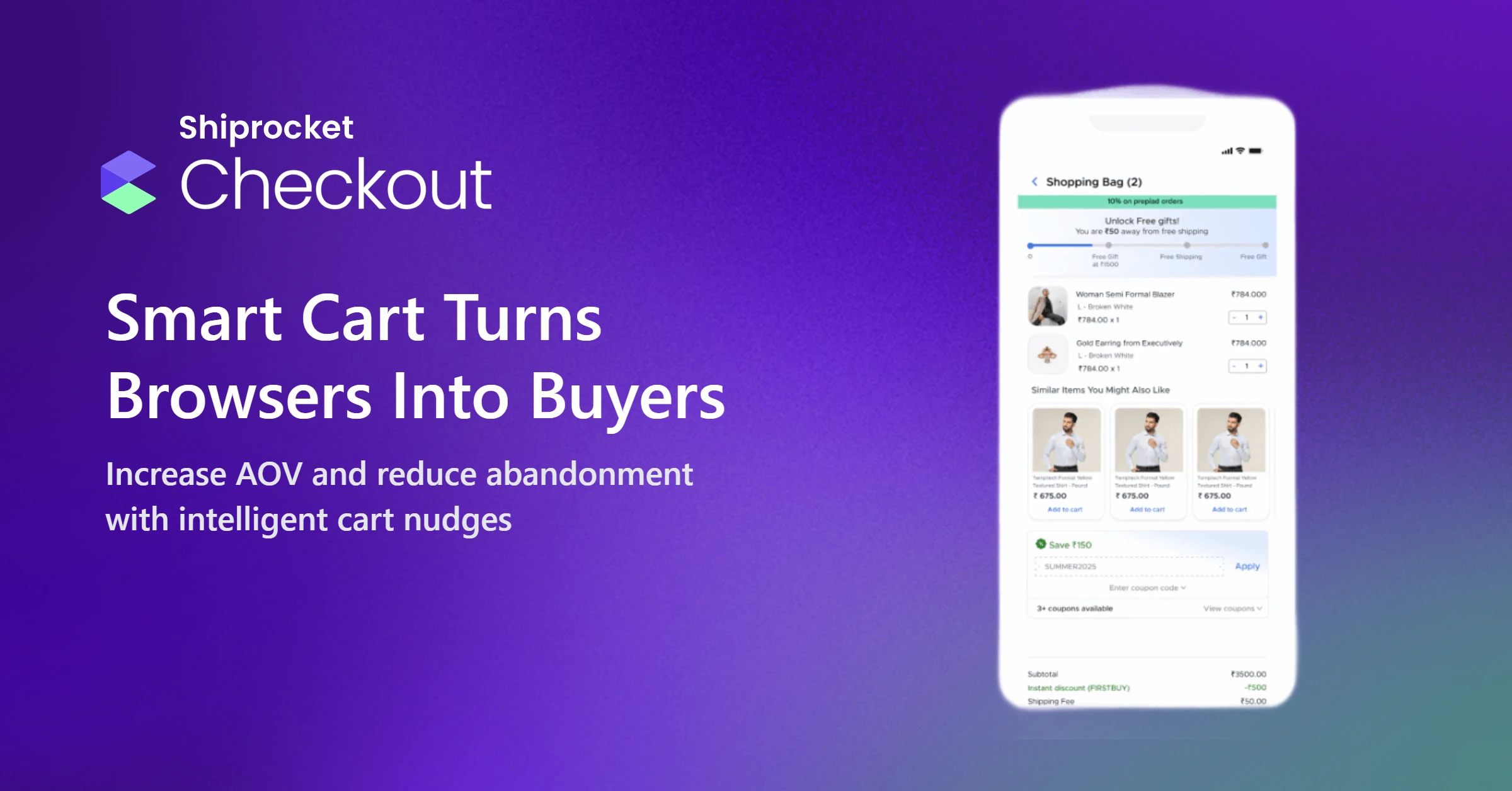
Shiprocket Smart Cart is described as a cart drawer feature that appears when a customer adds a product to cart, helping create a smoother cart-to-checkout experience without redirecting the shopper to a separate cart page (Source: Shiprocket Checkout).
For ecommerce brands, a better cart experience can support upsells, prepaid incentives, and clearer purchase flow.
Shipping and checkout should work together
A seller should not treat checkout and shipping as separate problems. A weak checkout may create low-quality COD orders. A weak delivery workflow may turn good orders into failed deliveries.
When you create a Shiprocket account, think beyond label generation. The full goal is a cleaner path from cart to delivery.
What to Check before Signing Up
Before using Shiprocket, review your current order volume, sales channels, product type, shipping zones, COD share, and return problems. This helps you choose the right workflow instead of turning on features blindly.
Check your order sources
List where orders come from: Shopify, WooCommerce, Amazon, marketplace sales, manual orders, social commerce, WhatsApp, or offline channels.
Shiprocket is most useful when it can reduce manual shipping work across your real sales channels.
Check your delivery zones
Look at where your customers live. Are most orders metro-based, tier-2, tier-3, remote, or mixed?
Shiprocket says it serves 19,000+ unique pin codes nationwide through domestic shipping services (Source: Shiprocket). Still, delivery performance can vary by courier and route, so check coverage for your actual buyer locations.
Check your COD and return rate
If your store depends heavily on COD, track COD confirmation, delivery success, cancellation, NDR, and RTO. Do not only track revenue before delivery.
A store with high COD order volume but weak delivery success may need to focus on buyer verification, prepaid incentives, courier selection, and NDR follow-up.
How to Use Shiprocket with Shopify
Shiprocket can be especially useful for Shopify sellers in India because shipping work needs to connect cleanly with order management.
Install and connect the app carefully
The Shopify App Store listing says Shiprocket helps ecommerce and D2C brands ship Shopify orders through a unified interface that brings 25+ courier partners onto one platform (Source: Shopify App Store).
After connecting, check whether orders sync correctly, product weights are accurate, pickup address is correct, and payment mode is mapped properly.
Make product weights accurate
Wrong weights can create freight issues, billing disputes, or courier mismatch. Add product weight and packaging assumptions carefully.
This matters more for products with bulky packaging, fragile items, multi-item bundles, or products where volumetric weight can differ from actual weight.
Keep customers updated
Buyers become anxious when tracking is unclear. Use order updates, tracking links, WhatsApp or SMS notifications, and support responses to keep customers informed.
When you use Shiprocket for Shopify shipping, tracking communication should be part of the customer experience, not an afterthought.
Common Shiprocket Mistakes to Avoid
Shiprocket can simplify logistics, but sellers still need clean operations. A platform cannot fully fix weak data, poor packaging, or unclear customer promises.
Do not use poor product weights
Bad product weight data can affect courier selection, freight charges, and delivery expectations.
Measure product and packaging weight properly. Review charges regularly so you can spot mismatches before they become expensive.
Do not ignore failed delivery reports
NDRs need attention. If your team waits too long, a recoverable delivery attempt may turn into RTO.
Set a process for NDR review, buyer contact, address correction, and delivery reattempt decisions.
Do not ship fragile items without a packaging plan
Courier choice matters, but packaging matters too. Fragile products, glass items, electronics, liquids, cosmetics, and gift boxes need stronger packaging and clearer handling expectations.
A low freight rate does not help if the product arrives damaged and creates refunds, replacements, or bad reviews.
How to Measure Shipping Performance
Shipping should be measured like a business system. The best seller is not only the one with the cheapest freight. It is the one with better delivered-order profit.
Track delivered orders, not only shipped orders
A shipped order is not finished. The business earns real value when the order is delivered, accepted, and not returned.
Track delivery percentage, delivery time, RTO rate, NDR recovery, return reasons, and customer complaints.
Compare courier performance by region
Do not judge couriers by one national average. Compare performance by zone, city, pin code, product type, and payment method.
A courier that performs well for prepaid metro orders may not be the best for COD orders in another region.
Compare profit after shipping and returns
Shipping cost should be measured against margin, RTO loss, packaging cost, return rate, and customer lifetime value.
When you start shipping with Shiprocket, build a simple monthly report that shows shipped orders, delivered orders, RTO, NDR, COD remittance, returns, and courier performance.
When Shiprocket Is a Good Fit
Shiprocket is a good fit when shipping work has become too manual, courier choice is unclear, COD needs better control, or customers need better tracking communication.
You sell through online channels
If you sell through Shopify, WooCommerce, Amazon, or other online channels, Shiprocket can help centralize order movement into shipping workflows.
This is more efficient than processing each channel separately when order volume grows.
You ship across many Indian pin codes
If your customers are spread across India, courier coverage and performance become more important.
Shiprocket’s domestic shipping service says it serves 19,000+ unique pin codes nationwide (Source: Shiprocket). This can help sellers compare courier choices for different routes.
You want better control over COD and RTO
COD and RTO can damage profit when unmanaged. Shiprocket is useful when sellers want tools for NDR, COD handling, returns, courier comparison, and delivery tracking.
For brands ready to compare Shiprocket shipping options, the decision should be based on operational control, not only headline freight rates.
When to Compare Other Options First
Shiprocket is useful for many sellers, but it is not automatically the best fit for every business. Compare carefully if your needs are unusual or highly specialized.
You need very specialized logistics
Some products need cold-chain delivery, hazardous handling, installation, white-glove service, strict compliance, or heavy freight.
In these cases, compare whether a general ecommerce shipping platform covers the requirement or whether you need a specialist provider.
You have very low order volume
If you ship only a few parcels occasionally, you may not need a full workflow yet. Basic courier booking may be enough at the start.
Still, if you plan to grow, setting up the right shipping process early can prevent messy operations later.
You need deep warehouse outsourcing
Some sellers need warehousing, inventory storage, picking, packing, and fulfillment, not just shipping labels.
Shiprocket has related fulfillment offerings, but sellers should compare the exact service, pricing, locations, inventory process, and service levels before deciding.
A Simple Shiprocket Signup Checklist
Use this checklist before and after signup. It helps sellers avoid setup gaps that create shipping issues later.
Before signing up
List your sales channels, average order volume, product weights, packaging types, COD share, main delivery zones, return rate, and biggest delivery problems.
This makes it easier to decide which Shiprocket features matter most for your store.
During setup
Add the correct pickup address, connect store channels, verify payment mode mapping, confirm product weights, review courier choices, and test a few shipments before scaling.
When you sign up for Shiprocket, avoid rushing the setup. A cleaner setup prevents recurring shipping errors.
After your first orders
Review delivery success, NDR, RTO, customer tracking questions, COD remittance, courier performance, weight disputes, and return reasons.
Use those insights to improve product pages, checkout messaging, courier selection, packaging, and customer communication.
Final Thoughts
Shiprocket is worth considering for Indian ecommerce sellers who want a more organized way to manage shipping, courier selection, prepaid and COD orders, tracking, returns, NDR, and RTO visibility.
The strongest reason to use Shiprocket is not only access to courier partners. It is the ability to turn shipping from a manual task into a measurable workflow.
Before signing up, review your sales channels, order volume, COD share, delivery zones, product weights, packaging, and return problems. A better setup can help protect margin, improve customer trust, and make growth easier to manage.
FAQ
What is Shiprocket?
Shiprocket is an ecommerce shipping and logistics platform in India. Shiprocket Support says it helps businesses integrate online stores, generate shipping labels, access courier partners, track shipments, and manage returns (Source: Shiprocket Support).
Does Shiprocket work with Shopify?
Yes. The Shopify App Store listing says Shiprocket helps Shopify sellers ship orders through a unified interface with 25+ courier partners, courier recommendations, branded tracking pages, and buyer updates through email, WhatsApp, and SMS (Source: Shopify App Store).
Is Shiprocket good for COD orders?
Shiprocket can be useful for COD workflows because it supports prepaid and COD orders, tracking, NDR handling, and tools focused on reducing RTO risk. Sellers can start with Shiprocket and track COD delivery success, NDR, and RTO instead of measuring only order volume.
We only recommend tools we've tested and trust. This post may include affiliate links, meaning we may earn a commission if you choose to purchase - at no extra cost to you.


