


Off-Page SEO Strategy & Site Audit Workflow in Netpeak Software

Off-page SEO is often described as “everything that happens outside your website.” That definition is technically correct, but it is also incomplete. Off-page SEO is not just a collection of tactics. It is the way search engines measure how the world responds to your brand—whether other sites reference you, whether people talk about you, and whether your business information looks trustworthy and consistent across the web.
When your off-page signals are strong, Google has more reasons to treat your site as credible. Rankings improve not because you changed a headline or updated a meta tag, but because your website earns authority from external proof—links, mentions, reviews, citations, and brand demand.
This guide rewrites the core ideas of a classic off-page SEO playbook using fresh structure, new vocabulary, and a more actionable workflow. It also includes a practical auditing routine, because off-page efforts work best when your website is technically healthy. Tools like Netpeak Spider make that process faster by helping you catch broken links, duplicate pages, and metadata issues before they limit your growth.

On-Page vs Off-Page SEO: The Simplest Way to Separate Them
Most SEO confusion comes from mixing responsibilities. Here is a cleaner distinction:
- On-page SEO is what you control directly on your site: content quality, internal linking, keywords, headings, metadata, page structure, and technical accessibility.
- Off-page SEO is what the internet “says” about you: backlinks, brand mentions, citations, reviews, and trust signals from third-party platforms.
On-page optimization improves clarity. Off-page optimization improves credibility. You need both. A well-optimized website with no external validation usually struggles to break into competitive rankings. A site with backlinks but weak technical foundations often leaks value because search engines cannot crawl, interpret, or trust the pages consistently.
Why Off-Page SEO Matters More Than People Admit
Search engines are not only evaluating pages. They are evaluating risk. When Google ranks your website, it is implicitly making a promise to users: “This result is worth your time.” Off-page SEO provides the evidence that helps Google feel confident in that promise.
Strong off-page signals tend to create three outcomes:
- Higher perceived authority as reputable websites reference your content.
- Better discoverability through referral traffic, social visibility, and brand searches.
- More resilience when algorithms change, because trust is harder to disrupt than isolated keyword tactics.
Off-page SEO also has a compounding effect. Each quality mention or earned link increases your ability to rank for future content, making every new page easier to grow.
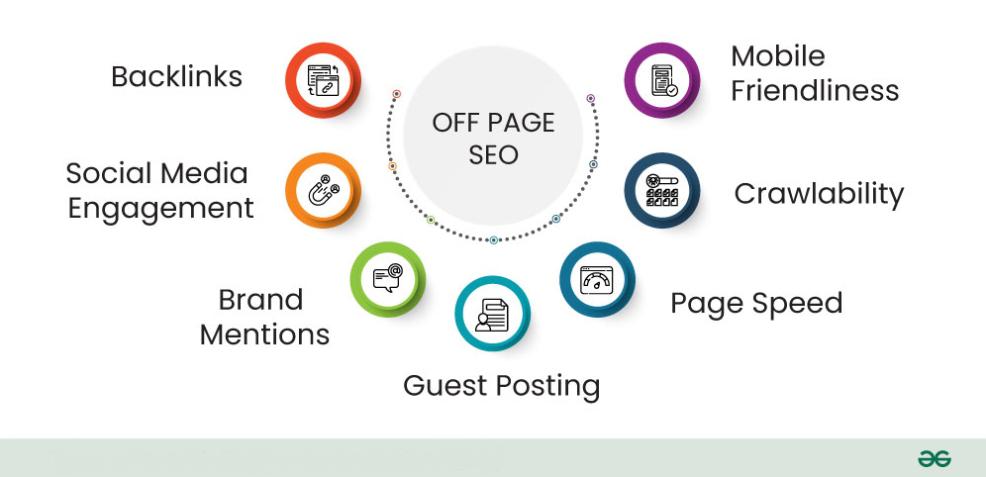
5 High-Impact Off-Page SEO Tactics You Can Run Consistently
Off-page SEO does not need to be mysterious. Instead of chasing “hacks,” focus on repeatable systems. The following five tactics cover most of what works long term.
1) Link Earning Through Relevance (Not Volume)
Backlinks still matter because they function like citations. A link from another site is a signal that your page is useful enough to reference. However, the goal is not collecting random links. The goal is building a backlink profile that looks natural and earned.
Focus on quality indicators that search engines tend to value:
- Links from sites that are thematically related to your niche
- Links placed in context (inside relevant content), not in footers or spammy directories
- Links from multiple unique domains (diversity matters more than repetition)
- Steady growth over time (sudden spikes can look unnatural)
If you are choosing between “more links” and “more relevant links,” relevance usually wins over volume.
2) Content Promotion That Creates Mentions
Creating content is only half the job. Promotion is what turns a page into an asset. Content promotion includes distributing your best resources where the right audience already exists.
Instead of posting everywhere, focus on channels where people actually reference sources:
- Communities and forums where your audience asks questions (contribute value first, not links).
- Newsletters that curate resources in your industry.
- Partners and integrations that can mention you on their sites.
- Resource pages and “best tools” lists that are continuously updated.
Promotion done well increases not only backlinks but also branded searches, which often strengthen trust signals indirectly.
3) Digital PR: Authority at Scale
Digital PR is one of the most powerful off-page methods because it can generate high-authority mentions while also building brand awareness. The strategy is simple: provide a story, dataset, or insight that journalists and publishers want to cite.
Examples of PR-friendly assets:
- Original research or survey results
- Industry reports and trend analysis
- Expert commentary with unique angles
- Data-backed case studies
PR works best when you pitch value, not products. The headline should be newsworthy even if your brand name were removed.
4) Social Proof and Reviews as Trust Infrastructure
Reviews are not only for conversion. They also function as trust signals that influence how people perceive your brand in search results. While social media “likes” may not directly boost rankings, public credibility often increases branded searches, click-through rates, and referral traffic.
Review best practices that protect trust:
- Ask customers for feedback at moments of success (after delivery, after a win, after resolution)
- Respond to reviews, including negative ones, with calm problem-solving language
- Avoid paying for fake reviews; authenticity is part of the signal
Think of reviews as reputation SEO. Over time, reputation becomes a ranking advantage because it shapes user behavior.
5) Local SEO Signals (If You Serve a Region)
If your business operates locally, off-page SEO includes local signals that validate legitimacy. Two of the most important are:
- Google Business Profile optimization: accurate categories, updated details, consistent posting, photos, and review responses.
- NAP consistency (Name, Address, Phone): the same information across directories, social profiles, and listings.
When NAP data is inconsistent, search engines may hesitate to trust the business entity behind the website. Consistency reduces that doubt.
Off-Page SEO Works Better When Your Website Is Clean
Off-page SEO creates authority. Technical SEO determines whether your site can actually capture and retain that authority. If your website has broken internal links, duplicate pages, or messy metadata, you may be building signals that never fully translate into ranking gains.
This is where auditing matters. A site audit is not a one-time event. It is ongoing hygiene.
Common issues that silently weaken performance include:
- Broken links that waste crawl budget and frustrate users
- Duplicate titles and meta descriptions that confuse search engines
- Redirect chains that slow down crawling and dilute link equity
- Orphan pages that receive no internal links and struggle to rank
- Incorrect canonical tags that point authority to the wrong URL
Fixing these problems does not replace off-page SEO—but it ensures your off-page efforts land on solid ground.
A Practical Website Audit Workflow Using Netpeak Spider
If you want a reliable, repeatable audit routine, you need a crawler that can scan your site, surface issues, and help you prioritize fixes. Netpeak Spider is designed for exactly this kind of technical review, especially when you want fast diagnostics without turning every audit into a multi-day project.
Here is a simple workflow you can run regularly:
Step 1: Crawl the site and map the basics
Start with a crawl that captures your indexable pages, status codes, and internal link structure. The goal is to get a clear picture of what search engines can access and how your pages connect.
Step 2: Identify critical errors first
Prioritize issues that block crawling or break user experience, such as 4xx errors, broken internal links, and redirect loops. These problems are high-impact because they directly waste authority and reduce trust.
Step 3: Clean up duplication and metadata inconsistencies
Next, review duplicate titles, duplicate descriptions, missing headings, and pages with thin or repetitive metadata. These issues make it harder for search engines to understand which pages should rank for which queries.
Step 4: Fix structural leaks that reduce SEO compounding
Look for orphan pages, weak internal linking, and crawl depth problems. If your best pages are buried too deeply, external authority may not flow efficiently across the site.
Step 5: Re-audit monthly (or after major changes)
SEO is not static. New pages, theme changes, migrations, and plugins can introduce problems quietly. A monthly crawl catches issues early so they do not accumulate into ranking stagnation.
For teams that want a straightforward way to audit sites, catch technical errors, and keep SEO foundations stable while running off-page campaigns, Netpeak Spider is a practical tool to add to the workflow.
How to Combine Off-Page SEO and Audits Into a Single Strategy
The most effective SEO systems treat off-page SEO and technical health as one cycle:
| Goal | What you do off-page | What you verify on-site |
|---|---|---|
| Build authority | Earn links via PR, partnerships, and useful content | Ensure pages are crawlable, fast, and properly canonicalized |
| Increase trust | Improve reputation through reviews and mentions | Fix broken pages, mismatched metadata, and confusing UX paths |
| Scale visibility | Promote assets through communities and publishers | Strengthen internal linking so authority flows sitewide |
This approach prevents the most common failure mode: working hard to earn authority, then losing gains because the site cannot convert that authority into rankings.
Conclusion: Off-Page SEO Is a Long Game, So Build Systems
Off-page SEO is not about tricks. It is about earning credibility in public. Links, mentions, citations, and reviews are signals that your brand exists and matters. When those signals grow steadily, rankings tend to follow.
At the same time, your website must be technically capable of absorbing that trust. Audits are how you protect the compounding effect. If you want a practical way to run regular crawls, catch structural issues early, and keep your SEO foundation clean while you build authority externally, tools like Netpeak Spider can make the process faster and more repeatable.
Build your off-page SEO like a system, not a sprint. Credibility compounds—especially for brands that stay consistent.


