


Klaviyo Email Marketing for Ecommerce: A Practical Guide

Email marketing still delivers some of the highest ROI in ecommerce—but only when it’s personalized, timely, and driven by real customer behavior. That’s exactly why many ecommerce teams choose Klaviyo: it’s built around customer data and automation, not just newsletter blasts. In this guide, you’ll learn what Klaviyo is, why it works so well for ecommerce, the key features that matter, and the campaigns you should launch first to grow repeat purchases.
1) What Is Klaviyo?
Klaviyo is an ecommerce-focused marketing automation platform built around customer data. It helps businesses send personalized email and SMS based on real behavior—like browsing, adding to cart, purchasing, and returning—so your marketing feels relevant instead of random.
Unlike basic email tools that mainly support newsletters, Klaviyo is designed to power lifecycle marketing: welcome sequences, abandoned cart recovery, post-purchase education, win-back campaigns, VIP segmentation, and more—without requiring a complicated engineering setup.
The key concept is simple: your email marketing becomes an extension of your store’s customer journey. When customers take action, the right message fires automatically. Over time, that creates repeat orders, higher lifetime value, and more predictable revenue.
2) Why Ecommerce Brands Choose Klaviyo
Most ecommerce stores don’t need “more marketing.” They need better timing and better targeting. Klaviyo is popular because it makes those two things easier to execute at scale.
It’s built around ecommerce events, not just contacts
Ecommerce marketing is event-driven: a customer browses, leaves, comes back, buys, returns, and buys again. Klaviyo treats these behaviors as triggers, not just “profile fields.” That’s why automation feels natural and conversion-friendly.
Segmentation is the real advantage
In ecommerce, one-size-fits-all messaging is expensive. The same email sent to a first-time buyer and a loyal customer will underperform for both. Klaviyo’s segmentation makes it easier to send different messages to:
- high spenders vs bargain shoppers
- one-time buyers vs repeat buyers
- recent purchasers vs inactive customers
- category-specific buyers (e.g., skincare vs accessories)
Automation creates revenue while you sleep
Well-built flows do not “spam customers.” They guide customers at moments when your store is already top-of-mind. The impact is usually strongest in these areas:
- recovering abandoned carts and checkout drop-offs
- increasing second purchases with post-purchase education
- reactivating customers before they churn
SMS is optional, but powerful when used carefully
SMS can drive fast action, but it can also annoy customers if overused. Klaviyo supports SMS as part of the lifecycle—useful for high-intent reminders and time-sensitive updates—while email carries the longer-form education and storytelling.
3) The Features That Matter Most for Ecommerce
Many platforms advertise dozens of features. For ecommerce, only a handful truly move the needle. Here are the ones that matter most.
Sign-up forms that capture high-quality leads
Email and SMS growth starts with list building. Klaviyo includes on-site forms like popups and embedded forms so you can collect subscriber data early—without needing complex setup.
What separates strong stores is not “having a popup,” but using a popup with intent:
- offer a clear benefit (not just a generic discount)
- ask minimal fields at first (reduce friction)
- collect preferences later via follow-up emails
Flow builder for automation
Automation is where ecommerce email becomes profitable. Klaviyo’s flow builder helps you create triggered sequences that respond to customer actions. In practice, this replaces manual campaigns with always-on systems that keep earning revenue.
Behavior-based segmentation
Segmentation is not just demographics. The highest ROI segments are behavioral:
- viewed product category but didn’t buy
- added to cart but abandoned
- purchased twice in 60 days
- used a discount code before
- high AOV customers who respond to new launches
When you build segments like this, your messaging becomes more persuasive because it matches intent.
Predictive-style customer insights
Ecommerce retention improves when you can anticipate what customers might do next: who is likely to reorder, who is likely to churn, and which customers are worth extra attention (VIP treatment, early access, premium bundles).
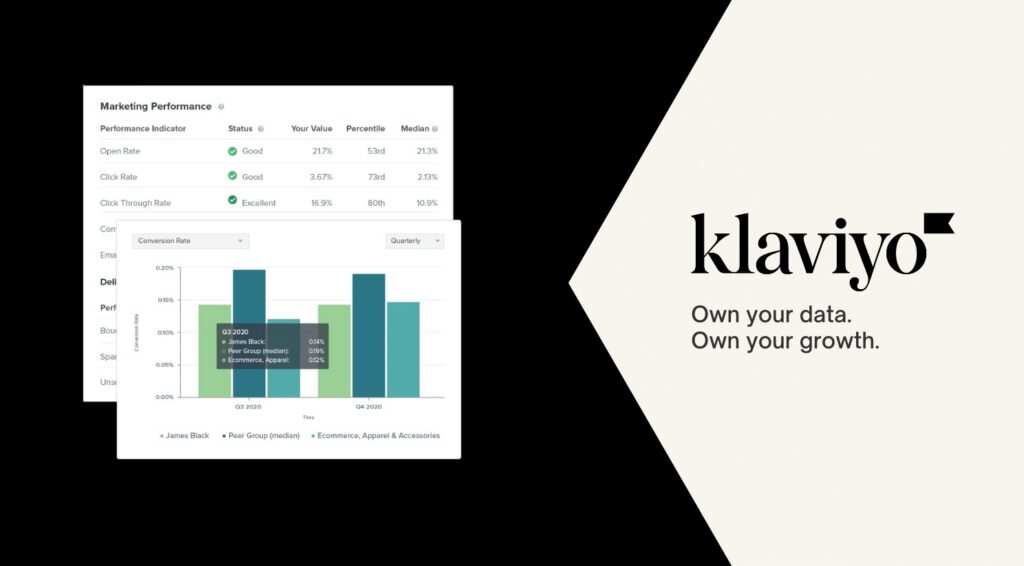
Custom reporting that ties marketing to revenue
The most useful reporting answers simple questions:
- Which flows drive the most revenue?
- Which segments respond best to campaigns?
- Are repeat purchase rates improving?
- Which product categories generate long-term customers?
That’s how you stop guessing and start optimizing.
4) Flows and Campaigns You Should Launch First
If you’re starting from zero, don’t try to build everything. Launch the flows that produce compounding retention first.
1) Welcome series
Your welcome flow is the highest-leverage automation because it turns new subscribers into first-time buyers. A strong welcome series usually includes:
- Email 1: brand promise and what makes you different
- Email 2: best sellers or “start here” recommendations
- Email 3: social proof (reviews, UGC, results)
- Email 4: gentle offer or deadline if you use incentives
Keep the tone human. The goal is trust, not pressure.
2) Abandoned cart and checkout follow-up
Cart recovery works when it addresses why customers hesitate. A practical sequence:
- Message 1: simple reminder + link back
- Message 2: highlight benefits + answer common objections
- Message 3: social proof or a light incentive (optional)
Use urgency carefully. Too much urgency reduces trust long-term.
3) Post-purchase education flow
Most stores stop at “thank you for your order.” But post-purchase is where retention is created. The goal is to ensure customers get results quickly, so they feel confident to buy again.
Depending on your product, include:
- how to use / setup / routine guide
- care instructions and best practices
- what to expect (timeline, common questions)
- recommended add-ons that improve outcomes
4) Review request flow
Reviews are not just for conversion—they’re for retention too. Customers who leave a review are more emotionally invested and more likely to return. Ask at the right time: after the customer has had enough time to experience the product.
5) Win-back flow
Win-back campaigns are where you recover revenue without new ads. Segment by inactivity windows (e.g., 30/60/90 days) and send:
- a helpful reminder + product relevance
- new arrivals or best sellers in their category
- a gentle incentive only if necessary
A strong win-back message feels like “we picked this for you,” not “please come back.”
Many ecommerce teams choose Klaviyo specifically because these flows are easier to build, test, and improve without needing extra tools.
5) Segmentation Playbook: Message Each Customer Group Differently
Segmentation is the difference between a “newsletter store” and a “retention engine.” Here are simple segments you can build quickly.
High spenders (VIP customers)
Goal: protect lifetime value and deepen loyalty.
- early access to new launches
- VIP-only email with behind-the-scenes or founder notes
- bundles that feel premium (not discount-driven)
One-time buyers
Goal: push the second purchase—your most important retention milestone.
- post-purchase education + “what’s next” recommendations
- small second-order incentive if needed
- stories that build brand belief and usage habits
Inactive customers
Goal: reintroduce relevance without sounding desperate.
- “new in your category” curation
- best sellers + social proof refresh
- product update or improved version messaging
Category-based buyers
Goal: personalize future offers based on what they actually like.
- content and routines tied to that category
- cross-sells that make sense (companion products)
- seasonal recommendations for that category
Segmentation doesn’t need to be complex. Start with 4–6 core segments and build from there.
6) Reporting and Optimization: What to Track Weekly
Good email marketing is iterative. You don’t “set it and forget it.” You set it, measure, and improve the parts that matter.
Track flow performance first
Flows are always-on. Improving a flow improves revenue every week.
- Welcome flow: conversion rate to first purchase
- Cart recovery: recovered revenue and click rate
- Post-purchase: second purchase rate and time-to-second order
- Win-back: reactivation rate by segment
Then track campaign consistency
Campaigns are where you tell stories and launch products. Focus on:
- deliverability and engagement trends
- segment-level performance (not only overall)
- revenue per recipient (a more honest metric than opens)
Simple optimization wins
- rewrite subject lines for clarity and curiosity
- shorten emails and improve scannability
- change timing based on customer behavior
- test one variable at a time (not 10 at once)
7) Common Mistakes to Avoid
Over-emailing without value
Too many promo emails trains customers to ignore you. Balance promotions with education, routines, and customer stories.
Not building the post-purchase journey
Retention begins after the first order. If customers don’t get results quickly, they don’t return.
Using one segment for everyone
Your list is not one audience. If your campaigns feel generic, segmentation is missing.
Relying on discounts as the only lever
Discounts can work short-term, but long-term retention comes from trust, habit, and community.
Ignoring deliverability basics
Engagement drops if deliverability is weak. Focus on list health, content quality, and consistent sending patterns.
8) FAQ
Is Klaviyo only for big ecommerce brands?
No. Small stores can start with a few key flows (welcome, abandoned cart, post-purchase) and grow into deeper segmentation as revenue increases.
Should I use email or SMS first?
Start with email for education and lifecycle depth. Add SMS selectively for high-intent reminders or time-sensitive moments, and keep frequency low.
How many flows do I need to start?
Start with 3: welcome series, abandoned cart, and post-purchase education. Then add win-back and review request once the basics are stable.
How do I increase repeat purchases with Klaviyo?
Focus on post-purchase education, second-order incentives (light), category-based recommendations, and win-back campaigns based on inactivity windows.
Do I need complex segmentation to see results?
No. Even 4–6 basic segments can significantly improve relevance and performance compared to sending the same message to everyone.
9) Final Thoughts
Klaviyo works best when you treat email marketing as a lifecycle system: welcome, recover, educate, retain, and win back. If you build those systems first, your store becomes less dependent on constant ads and more supported by predictable repeat revenue.
If you want a platform that makes ecommerce segmentation and automation feel practical (not overwhelming), you can explore Klaviyo as your retention engine—and build from a few high-impact flows into a full lifecycle strategy as your store grows.
Building retention revenue with Klaviyo becomes much easier when you combine smart segmentation, high-performing flows, and clear reporting—then strengthen results with better store messaging, social proof, and a customer journey that turns first-time buyers into loyal repeat customers over time.


